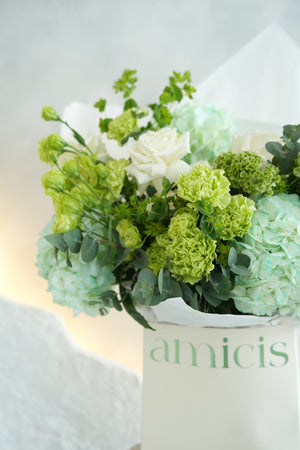
Mint Whisper gathers mint-green hydrangeas, white roses, green carnations, lisianthus and trailing eucalyptus into one quietly modern arrangement. It is a composition built on restraint rather than spectacle, where soft green carries the eye and ivory keeps everything luminous and clean.
The hydrangea sets the tone. Native to Japan and the Americas and cultivated in European gardens since the eighteenth century, it forms its rounded heads from dozens of tiny florets, giving each stem a generous, cloud-like volume and a cool, papery texture. Its colour shifts with the soil it grows in, and here the pale mint reads as calm and considered. As a flower it has long spoken of heartfelt emotion and gratitude. Threaded through it, the classic garden roses bring their own history - perhaps the most storied of all cut flowers, prized since antiquity for the velvet weight of their petals and their gentle, powdery fragrance. In white, the rose carries meanings of reverence, new beginnings and sincere affection.
The supporting blooms add quiet detail. Lisianthus, with its ruffled, almost rose-like petals on slender stems, lends a delicate movement, while green carnations contribute a ruffled, clove-warm note and the long-lasting structure carnations are loved for. Eucalyptus runs through the whole piece with its silvery foliage and clean, faintly medicinal scent, the green that ties ivory and sage together.
The result is a palette of soft whites and greens that feels modern, elegant and unhurried - a piece that suits a calm interior, a thoughtful gesture, or anyone drawn to colour used with discipline rather than excess. It sits naturally within our luxury flowers collection for those who favour understatement.
Each Mint Whisper is hand-finished by our florists in the Amicis Dubai atelier, conditioned and tied by hand before delivery. To keep it at its best, trim the stems on arrival, refresh the water every couple of days, and keep the arrangement out of direct sun.