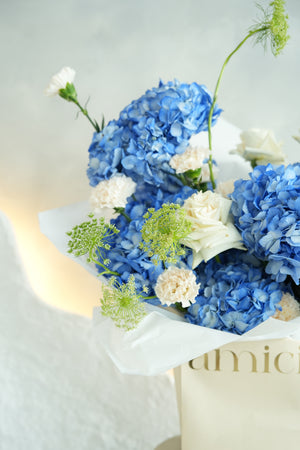
Windsor is built around three quietly confident blooms: blue hydrangeas, white roses and white carnations, drawn together with airy green accents that let each flower breathe. The result is a soft, classic composition in blue, ivory and green - graceful rather than grand, and deeply calming to be near.
The hydrangea anchors the piece. Cultivated in Japan for centuries before reaching European gardens in the 1700s, it carries broad, cloud-like heads made of dozens of tiny florets, and its rare blue tones - coaxed from the soil itself - give Windsor its restful, watercolour mood. Hydrangeas are long associated with heartfelt emotion, gratitude and understanding, which is part of why they read as both elegant and sincere. You can see more of their range across our hydrangea arrangements.
The white garden roses bring history and form. Cultivated for over five thousand years and beloved from Persian gardens to English estates, the rose needs little introduction; in ivory it shifts from romance to reverence, a symbol of purity, respect and new beginnings. Its petals carry that familiar soft, sweet fragrance - present but never heavy - that gives the arrangement its gentle scent.
White carnations complete the trio. One of the oldest cultivated flowers, named by the Greeks as the flower of the gods, the carnation offers ruffled, clove-scented blooms and remarkable longevity in the vase. In white it speaks of pure affection and remembrance, a thoughtful note that suits both celebration and quiet sympathy.
Together the palette feels serene and unhurried - blue cooling the ivory, green lending freshness. Windsor suits anyone who favours understated beauty over bold colour: a calming gift for a home, a tender gesture of comfort, or a refined token of respect. Explore the wider edit in our luxury florals.
Each Windsor is hand-finished in our Dubai atelier, stem by stem. To keep it fresh, trim the stems on arrival, refresh the water every couple of days, and keep the arrangement out of direct sun and draughts.